The planning journal
Before You Alter an Heirloom Wedding Dress, Agree What Can Change
Agree permissions, a professional assessment and a careful handover before changing a family wedding dress.
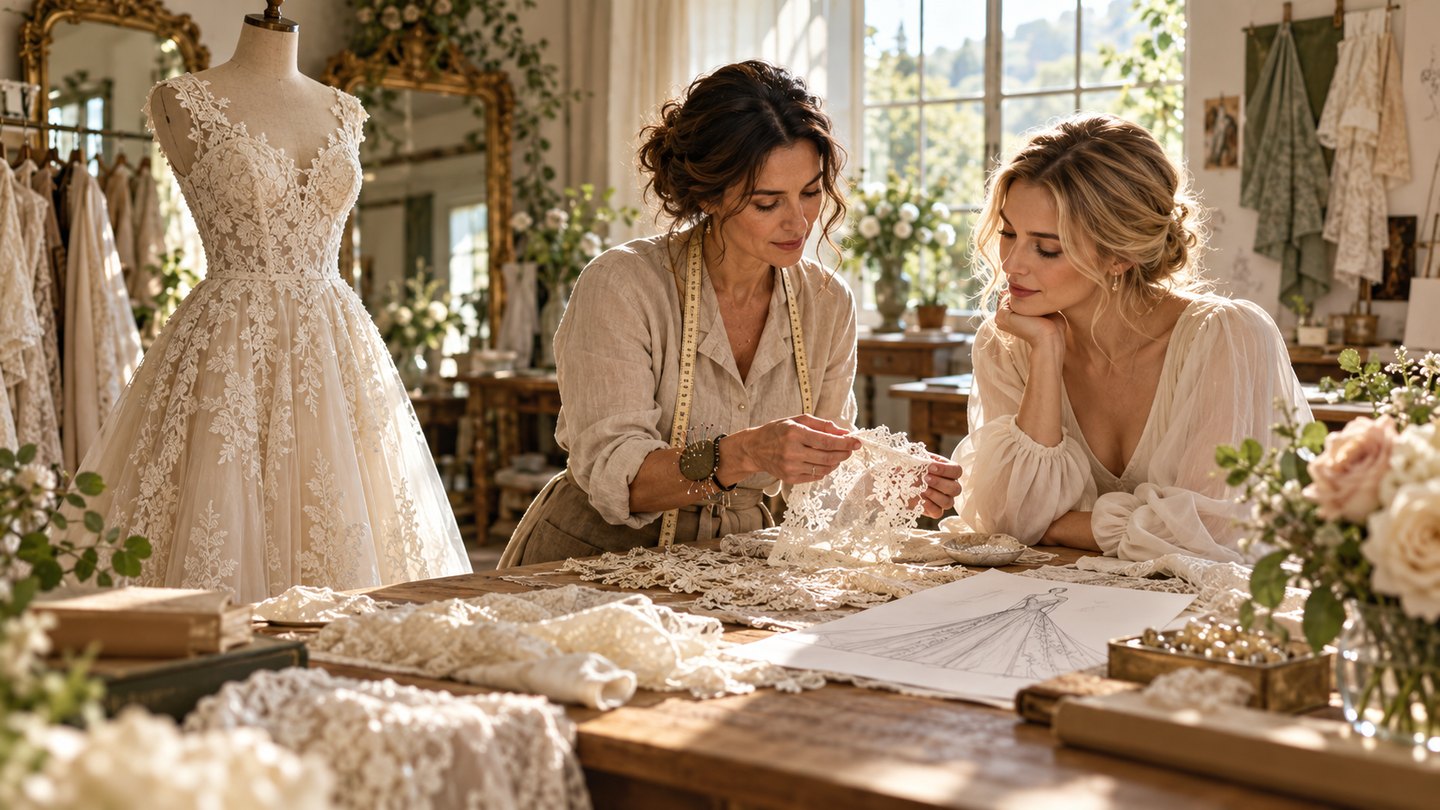
A family wedding dress can arrive with two stories: the one you imagine wearing and the one its owner remembers. Those stories need not compete. Before anyone removes a sleeve, shortens a hem or changes a neckline, make room for a conversation about ownership, permission and what everyone hopes to preserve. An alteration appointment is much easier when the person doing the work does not have to settle a family disagreement at the cutting table.
Begin with the owner, not the scissors
Establish whether the dress is a gift, a loan or something you are still discussing. These are different arrangements. A gift may come with emotional expectations that have not been spoken; a loan does not automatically include permission to make permanent changes. Ask directly who can approve alterations and whether another relative expects to wear the garment later. Put the agreed arrangement into a short message everyone can reread. This is a practical memory aid, not a substitute for legal advice when ownership is disputed.
Then separate the reason for wearing it from its exact construction. You may love the fabric, a family connection or the shape of the original collar. The owner may care most about keeping a particular trim intact. Naming those details can reveal a workable direction before a designer has been asked to produce an impossible compromise.
Make a condition record together
Photograph the whole dress and important details in good light before handing it over. Note existing marks, loose decoration, changed areas and any accessories travelling with it. Avoid assuming a stain is removable or a fragile panel can support a new fastening. Ask the professional examining the actual garment what can reasonably be assessed at the first visit and what remains uncertain until they inspect it more closely.
Do not try unfamiliar cleaning, heat, adhesive or stain treatment simply to prepare for the appointment. Historic textiles and modern fabrics can require different handling. If preservation is a priority, ask whether a textile conservator should advise before alteration work begins. The useful first decision may be to pause rather than to choose a new silhouette.
Divide proposed changes into three groups
Ask the dressmaker to explain which changes are readily reversible, which would leave evidence and which permanently remove original material. Do not label a change reversible yourself because it looks small. Moving a fastening, cutting a hem or removing decoration can have consequences that depend on the garment.
Create a simple approval note: proposed work, who approves it, what must remain untouched and whether removed material is returned. Request a revised estimate if the scope changes after inspection. The note should distinguish an idea discussed at a consultation from work actually authorised. A sketch or photograph with marked areas can be clearer than a long description of the look you want.
Keep another way to honour the story
Wearing the whole garment is not the only meaningful outcome. You could preserve it, display an approved photograph, wear a separate accessory or create a new outfit that refers to its shape without cutting the original. These are options to discuss, not obligations. Nobody needs to sacrifice comfort or turn a family object into something it cannot safely become.
If you decide against wearing it, explain the decision before the family sees a replacement outfit online. A thoughtful refusal can protect the relationship more successfully than accepting the dress and later making changes its owner did not expect.
Give the handover an ending
Before collection, confirm the agreed work, remaining concerns, accessories and any returned fabric. Ask for the garment's own handling and storage instructions. After the wedding, close the loop: who receives it, when it returns and whether further care needs professional advice. For bridal businesses, this is also good service design. Clear approvals and a respectful handover make a personal project easier to understand without pretending that sentiment can be priced or guaranteed.
Editorial context: original planning guidance, not a garment assessment. Consult the professional who can examine your dress. Further reading: the George Washington University Museum and The Textile Museum's public care resources at George Washington University Museum textile-care resources .